Introduction
Many existing clinical AI models remain static or retrospective: they predict diagnosis, deterioration, readmission, mortality, or treatment response under observed care, but do not explicitly model how a patient may evolve under alternative interventions. We define medical world models as AI systems that learn patient-state dynamics from multimodal clinical data, simulate future disease trajectories under alternative interventions, and support safe clinical decision-making under uncertainty.
This workshop brings together researchers and practitioners from artificial intelligence, machine learning, medicine, biomedical informatics, medical imaging, causal inference, clinical decision support, and digital health, through invited talks, paper spotlights, posters, and a panel discussion, to define an emerging interdisciplinary research agenda for dynamic, simulation-based, decision-grade healthcare AI.
MELBA Special Issue
The workshop is paired with a special issue of MELBA, the open-access journal of Machine Learning for Biomedical Imaging. Authors of accepted workshop papers will be invited to submit extended manuscripts for independent peer review — an archival publication pathway while the workshop itself stays non-archival.
Topics
We invite submissions on topics including, but not limited to:
- World model architectures and longitudinal foundation models
- Multimodal patient states and disease trajectory prediction
- Treatment-response forecasting and counterfactual simulation
- Digital twins and patient-specific clinical modeling
- Causal, mechanistic, and simulation-based healthcare AI
- Continuous-time and irregularly sampled clinical modeling
- Model-based planning and clinical decision support
- Uncertainty, safety, and clinical validation
- Datasets, benchmarks, surveys, and demonstrations
Call For Papers
Key Dates
| Event | Date |
|---|---|
| Call for Participation posted by AAAI | October 16, 2026 |
| Paper submissions due to organizers | November 15, 2026 |
| Acceptance notifications | December 2, 2026 |
| Final version due | December 15, 2026 |
| Workshop day | February 22 or 23, 2027 (half-day; exact date and session TBA), Palais des congrès, Montréal, Canada |
Submission Format
All papers must be submitted as a single PDF in the AAAI two-column format (maximum 50 MB), using the AAAI author kit. We welcome two types of submissions:
Full papers: 6–8 pages (excluding references and appendices).
Short / poster / position papers: 2–4 pages (excluding references and appendices).
Supplementary material (optional) may be uploaded together with the submission on OpenReview as a single PDF or ZIP file (maximum 50 MB).
The workshop is non-archival and has no official proceedings, allowing later conference or journal submission. Accepted submissions, along with their author names, will be released to the public after the workshop is over.
Reviewing is single-blind, and submissions do not need to be anonymized. We also welcome submissions of work that is under review elsewhere or has been recently published in a conference or a journal; authors should state any overlapping published work at the time of submission.
MELBA Special Issue
Accepted papers will be hosted on OpenReview and on this website; submissions are non-archival, and extended versions may later be submitted to the MELBA special issue. Authors of accepted workshop papers will be invited to submit extended manuscripts, which will follow MELBA’s independent peer-review process.
Position Papers
Position papers (2–4 pages) argue for a clear viewpoint or perspective on an issue relevant to medical world models — for example, how such models should be built, evaluated, or deployed in healthcare. Unlike papers reporting completed research advances, a position paper is judged on the clarity and rigour of its argument and on the significance of the issue it raises. A position may be supported by reasoning, by analysis or synthesis of the literature, or by experimental evidence: completed experiments are not required, and an architectural proposal supported by literature and a concrete evaluation plan is welcome. Claims should be grounded in appropriate evidence and citations, and the central position should be easy to summarise.
Submission Site
Submissions are handled via OpenReview and are now open: Submit on OpenReview (submission deadline: November 15, 2026, Anywhere on Earth).
All authors must have an OpenReview profile before submitting. New profiles created without an institutional email address go through a moderation process, so please register early.
Author FAQ
Who can submit? Anyone — academic, industry, and clinical authors are all welcome. Single-author and independent submissions are welcome, and no academic affiliation or academic co-author is required.
Is my work in scope? If your work is related to one or more of the topics listed on this page, it is in scope — including, for example, work on decision support or evidence synthesis that connects to those topics. Authors are the best judges of fit for their own work.
Does a position paper need completed experiments? No. See the Position Papers section above: reasoning, literature synthesis, and a concrete evaluation plan are acceptable forms of support.
Can I submit work that is under review or already published? Yes. The workshop is non-archival and has no official proceedings, so work under review elsewhere, or recently published in a conference or a journal, may be submitted and presented. Please state any overlapping published work at the time of submission.
Do I need to anonymize my submission, or hide product or company names? No. Reviewing is single-blind, so submissions do not need to be anonymized.
Do I have to release code and data? Releasing code and data is encouraged, but not required.
What are the rules on the use of AI tools? The use of AI tools in preparing a submission follows the AAAI policies on AI use for authors.
Is there a submission fee? No — there is no submission or post-acceptance fee. The presenting author must hold an AAAI registration that includes the workshop; whether you register for the workshop only or for more of the conference is your own choice.
Are fee waivers or travel grants available? Not at this time. If this changes, the update will be posted on this website.
Will accepted papers be presented as posters or talks? Both poster presentations and oral presentations are planned. The format assigned to each accepted paper will be announced in December 2026.
Can I present remotely? No. The workshop is in-person only, and there is no virtual presentation option.
Confirmed Keynote and Invited Speakers



Workshop Schedule
February 22 or 23, 2027 (half-day) · Palais des congrès, Montréal, Canada — exact date and room to be announced by AAAI.
| Time | Activity |
|---|---|
| 08:45 – 09:00 | Welcome and Introduction |
| 09:00 – 09:30 | Invited Keynote 1 |
| 09:30 – 10:00 | Invited Keynote 2 |
| 10:00 – 10:30 | Invited Keynote 3 |
| 10:30 – 11:00 | Paper Spotlight Presentations |
| 11:00 – 11:45 | Coffee Break, Poster Session, and Networking |
| 11:45 – 12:30 | Panel Discussion and Audience Q&A |
| 12:30 – 12:35 | Closing Remarks and Best Paper Recognition |
Accepted Papers
To be announced after the review process (expected early December 2026).
Organizing Committee
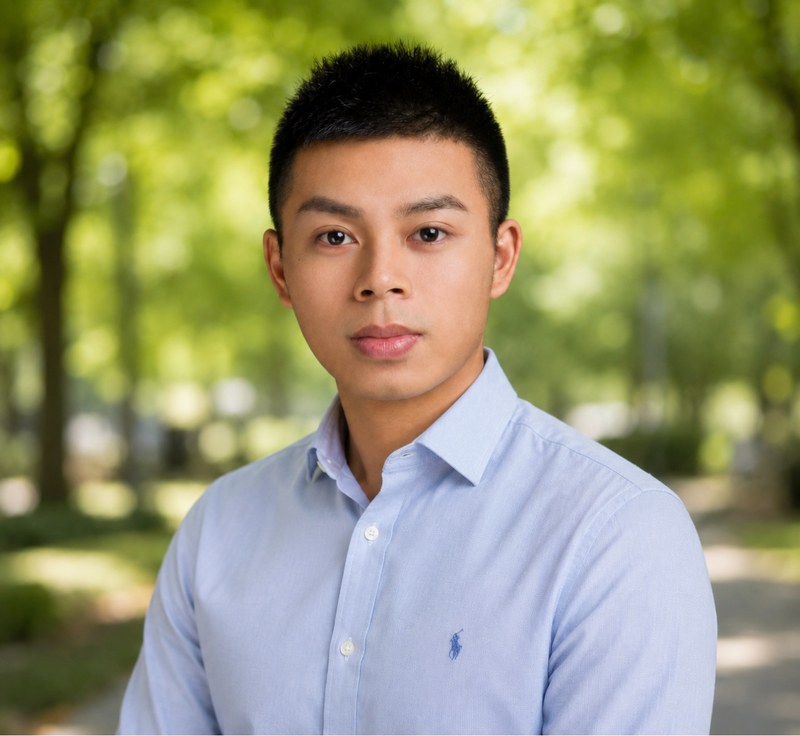




Student Organizers
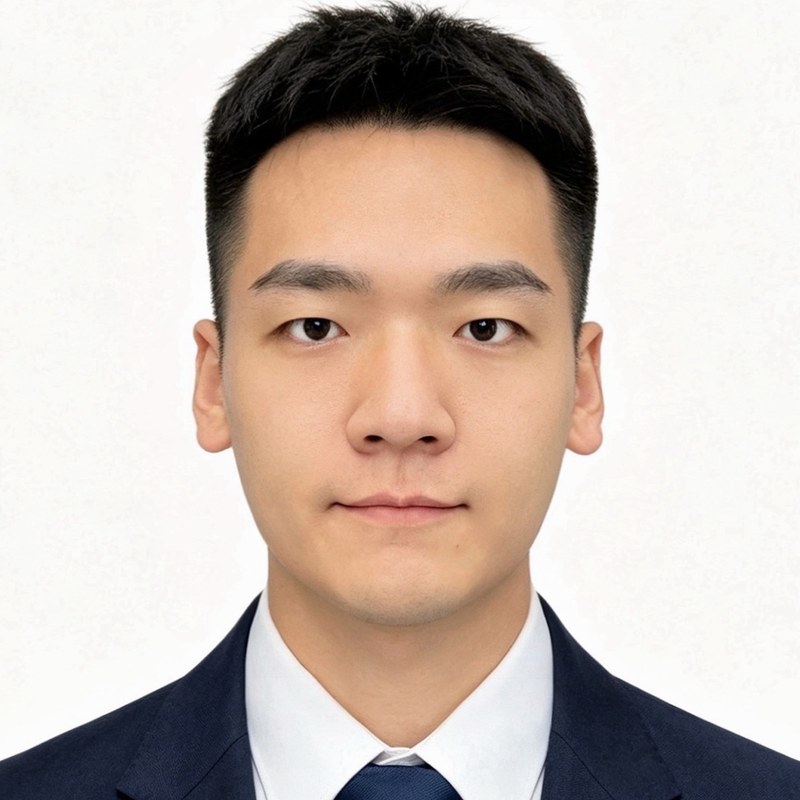
Ruipeng Ma
The Hong Kong Polytechnic University

Yanchen Mu
The Hong Kong Polytechnic University

Ziyan Huang
National University of Singapore
Advisory Board




Program Committee
The Program Committee roster is being finalized and will be announced soon.
Contact
For any questions, please contact the organizing committee at med-wm@googlegroups.com.
Become a workshop sponsor — help shape the future of Medical World Models! Contact us at med-wm@googlegroups.com.